
Academic Papers
Updates Severe storms & flooding
By Sergio Matalucci
Published February 27, 2026
UK CA priorities
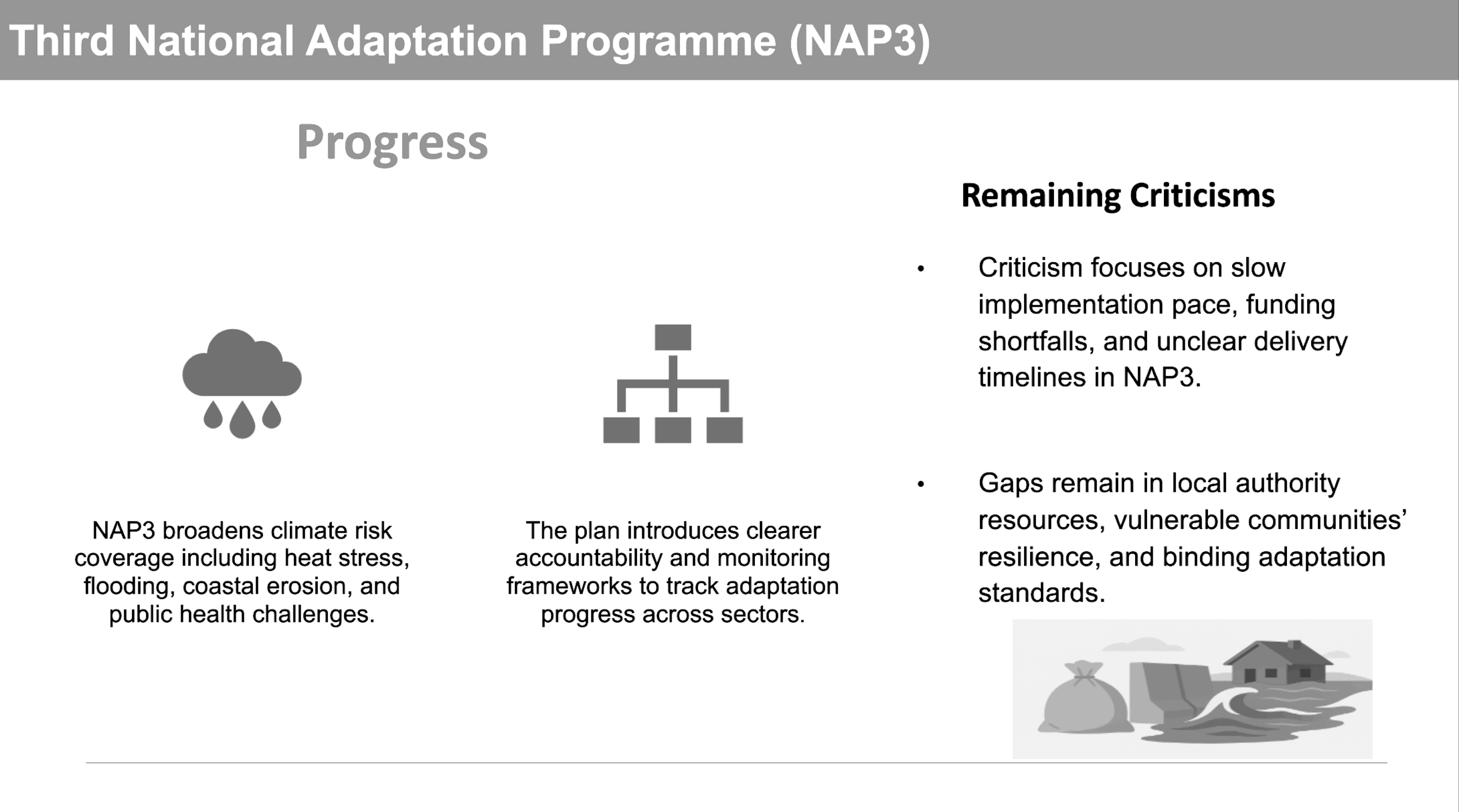
The British adaptation plans mostly focuses on one climate hazard: flooding. Water management has been a red thread throughout the Westminster conference on February 27, 2026.
During the online event, experts highlighted progress at the national level in educating the involved parties, including local authorities and stakeholders. This has been a key challenge so far, experts noticed during the “Priorities for climate adaptation and resilience for UK infrastructure” conference.
Experts also underlined some progress, yet not enough, in defining the standards, which could promote system integration and better data.
Julie Foley, Director, Flood Risk Management Strategy and National Adaptation at the Environment Agency, said that the weather is changing, with increased precipitation and greater challenges for water management systems. “Around 355 properties have flooded across England, primarily in the South West”, said Foley.
She then underlined the growing threat of groundwater flooding. "6.3 million properties in England are currently in areas at risk of flooding from one or a combination of sources: rivers, the sea and surface water,” said Foley, adding that the Environment Agency estimates this could increase to around 8 million properties by the mid-century. “This equates to 1 to 4 people.”
Ingrid Holmes, Deputy CEO of the Green Finance Institute, mentioned the need for solid data to enable cheaper private capital and public funding for climate adaptation policies. She also called for adaptation measures to be included in wider energy and climate transition plans.
James Hay, Principal Sustainable Finance Advisor at Pinsent Masons, intervened, reminding that there are currently not many investment projects with reasonable cash flows. “There are benefits, but this seems more risk management”, said Hay, mentioning the structural limitations of adaptation investments and, at the same time, the growing awareness of the importance of climate adaptation, also in the financial markets. He also noted that the emerging financial data are progressively opening the doors to investments in resilience.
Claudine Blamey, Chief Sustainability Officer at Aviva, underlined the need to provide fiscal support for investments in climate adaptation to maximise the replicability of projects across different geographies.
Francis Heil, Associate Director for Climate Change at AtkinsRéalis, asked for collaboration between infrastructure providers and central and local institutions to implement existing adaptation plans targeting both flooding and heat risks. Heil said that public engagement is necessary to help the public understand the risks and the need for related investments.
The conference did not address political consequences and only marginally mentioned wildfires.
Academic Papers

Academic Papers

Academic Papers